
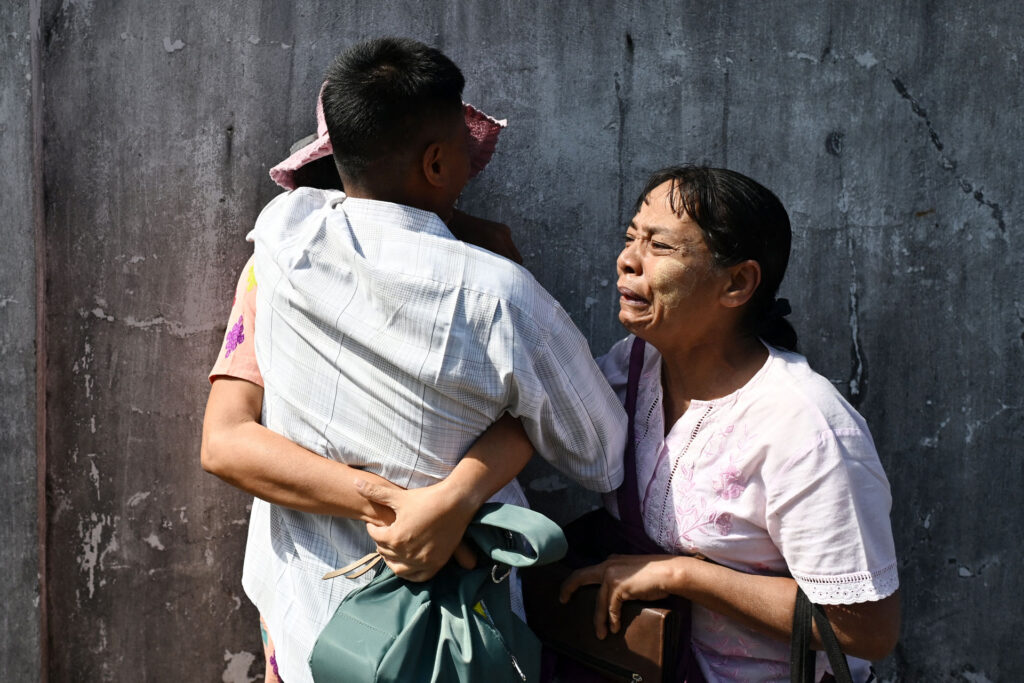
Photo – AFP
This Flash Update No. 3 (English Version) was published on December 1, 2025, as a translation of the original Burmese version published on November 28, 2025.
▪️Period
November 26, 2025.
▪️Stakeholders
The State Security and Peace Commission (SSPC); individuals arrested or imprisoned under Penal Code Section 505-A; and those currently facing charges under this provision.
▪️Issue
On 26 November 2025, the SSPC announced an amnesty and sentence reductions for 8,665 individuals arrested, imprisoned, or charged under Penal Code Section 505-A since the 2021 coup. Of these:
- 724 people imprisoned solely under Section 505-A were released;
- 2,361 imprisoned under Section 505-A, alongside other charges, received sentence reductions (for the portion of their sentence under Section 505-A);
- 5,580 people charged under Section 505-A and Criminal Procedure Code Section 512 for absconding had their cases closed.
▪️Context
The SSPC framed the amnesty as a step to enable voting participation in the planned election. Two other developments form part of the backdrop. First, on 25 November 2025, the United States terminated Temporary Protected Status (TPS) for Myanmar nationals. The decision cited factors including a China-mediated ceasefire in Myanmar, the existence of election plans, and lifting of the state of emergency, suggesting conditions were safe enough for return. Second, the move coincided with the visit of Belarusian President Alexander Lukashenko, a European ally of the junta, to Naypyitaw. His trip was only the second by head of state to Myanmar since the coup, following former Cambodian Prime Minister Hun Sen’s visit in 2022.
▪️Implications
In the nearly five years since the coup, the junta has announced 18 amnesties, releasing 112,926 prisoners. Only 15,444 of these were political prisoners—just 13.7 percent of the total (see ISP-DM2025-197). International consensus on Myanmar has consistently stressed the need to release all political prisoners, including Aung San Suu Kyi, and to initiate an inclusive political dialogue. As key political figures such as Aung San Suu Kyi remain excluded from this latest amnesty, international pressure over the release of political prisoners is likely to continue.
▪️Relevance
ISP-Myanmar identifies three key trends to watch in the post-election period: the junta’s capacity to prepare for and manage the political and military landscape; efforts to secure bilateral ceasefires with individual Ethnic Armed Organizations (EAOs); and the ability to respond to Chinese involvement in Myanmar’s internal affairs. Amnesties of this kind offer a window into the SSPC’s post-election strategy and its attempts to calibrate both domestic and international pressure.

ISP Flash Updates
Political Prisoners Make Up Only 13 Percent of Releases in 18 Amnesties