
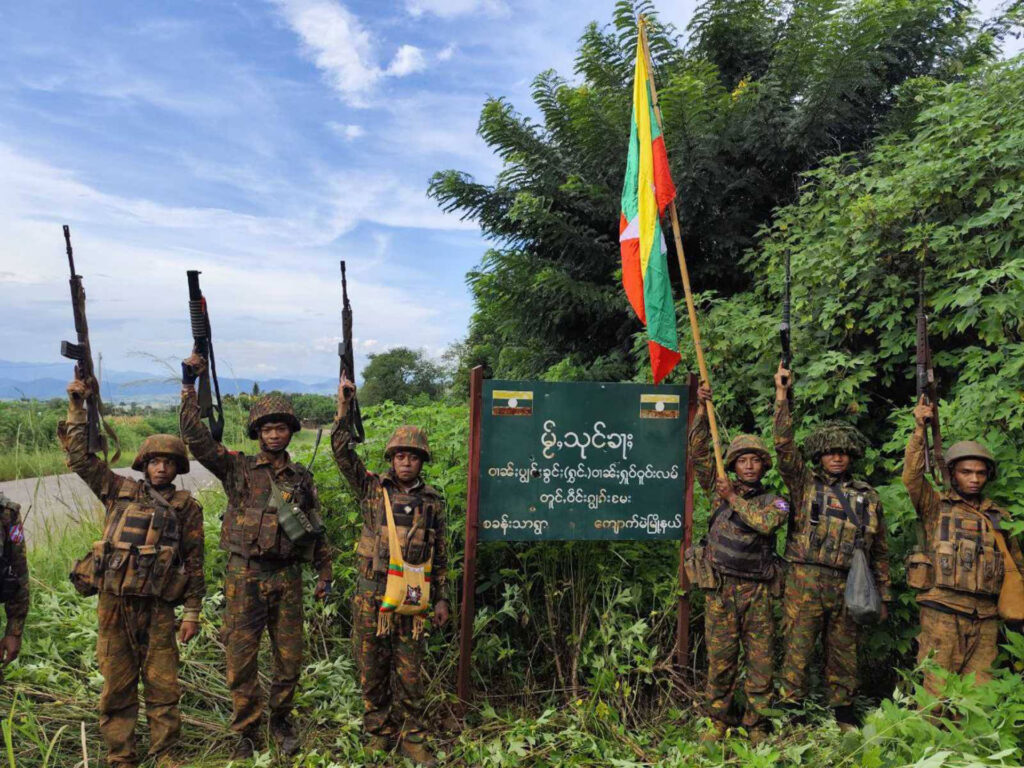
Photo – Khaing Zaw / Telegram
This Flash Update No. 2 (English Version) was published on October 8, 2025, as a translation of the original Burmese version published on October 3, 2025.
▪️Period
October 1, 2025
▪️Stakeholders
Junta troops and Ta’ang National Liberation Army (TNLA)
▪️Issues
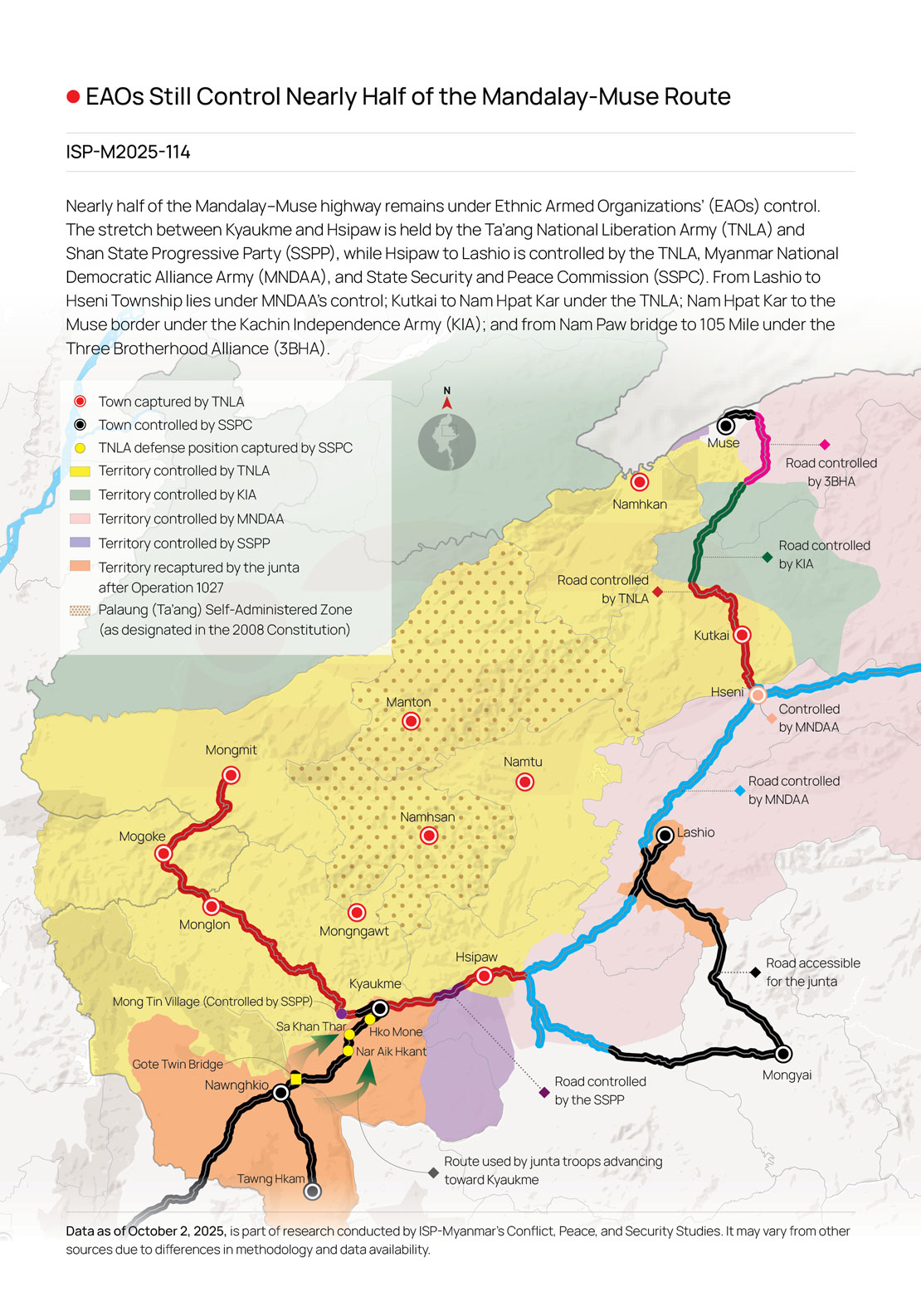
The State Security and Peace Commission (SSPC) retook Kyaukme town on October 1, ending more than a year of TNLA control. Following its earlier loss of Nawnghkio on July 15, the TNLA has now been pushed out of Kyaukme as well.
▪️Context
After recapturing Lashio—previously seized by the Kokangs (MNDAA)—on the Mandalay–Muse road through Beijing’s mediation, the SSPC has shifted its focus toward towns held by the TNLA. Despite three rounds of China-brokered ceasefire talks between the junta and the TNLA, no agreement was reached. During the August negotiations, the TNLA proposed returning Kyaukme and Hsipaw, but the regime rejected the offer, declaring its intention to seize all remaining towns through offensives except Namhsan and Mantong and listing both Kyaukme and Hsipaw as constituencies for upcoming elections. Meanwhile, the TNLA’s ally, the United Wa State Army (UWSA), announced in August that it would cease support for other armed groups, while the MNDAA has been constrained by Chinese pressure. Beijing, prioritizing stability, wishes to resume trade and business along the Mandalay–Muse trade route.
▪️Implications
The SSPC has deployed troops near Mong Tin village along the Kyaukme–Mogoke road and captured Yadana Theingi village on the Nawnghkio–Mogoke route. A continued offensive toward Mogoke, a TNLA-controlled town rich in mineral resources, appears likely. With SSPC expanding its foothold, the TNLA may face mounting pressure to fend off the regime’s military push or to reject its proposals in the talks slated for late October.
▪️Relevance
With the backing of Beijing for the election and the 2008 Constitution framework, the SSPC continues to pursue a ceasefire in the border area and the reopening of border trade routes. Studying shifts in territorial control between resistance forces and the junta can shed light on how emerging ceasefire arrangements—shaped by trade and economic interests—are taking form.
ISP Flash Updates
Junta’s Northern Offensive Regained Two Towns