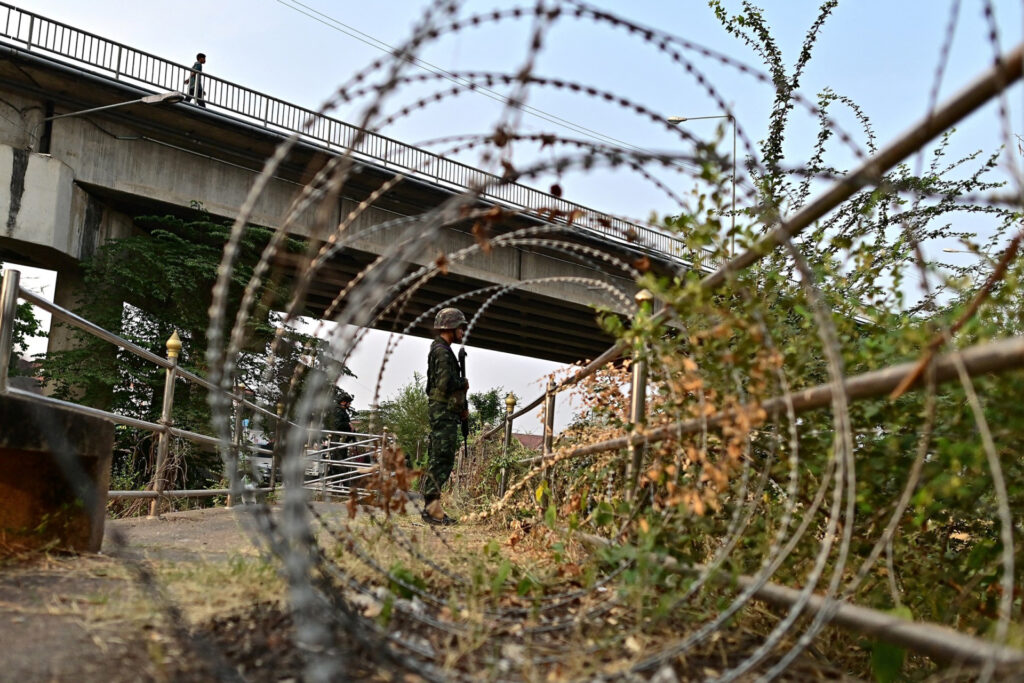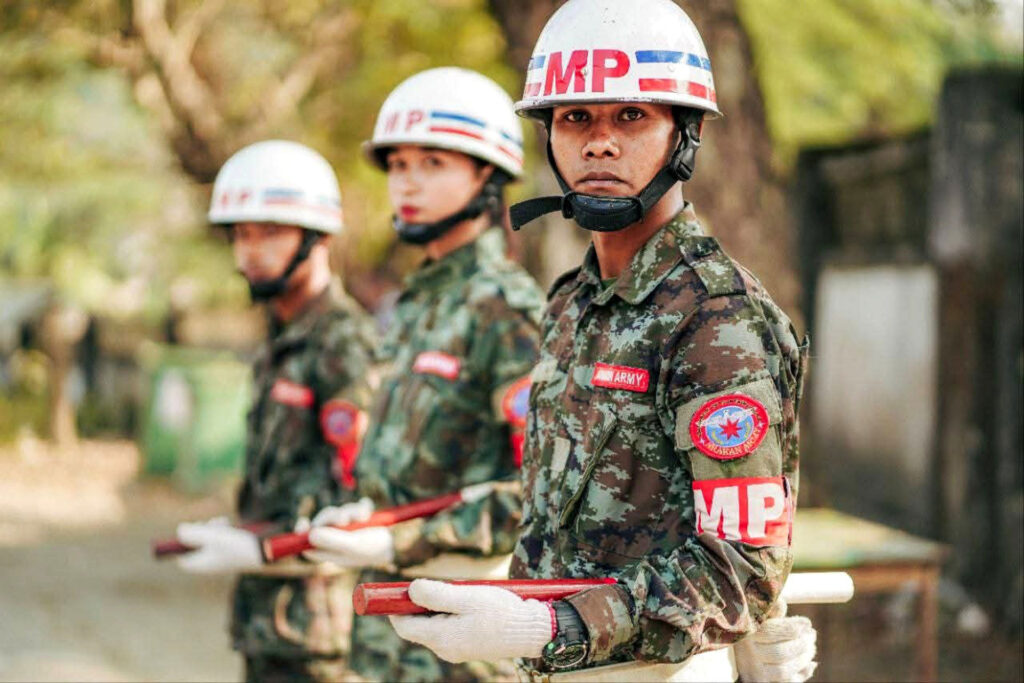
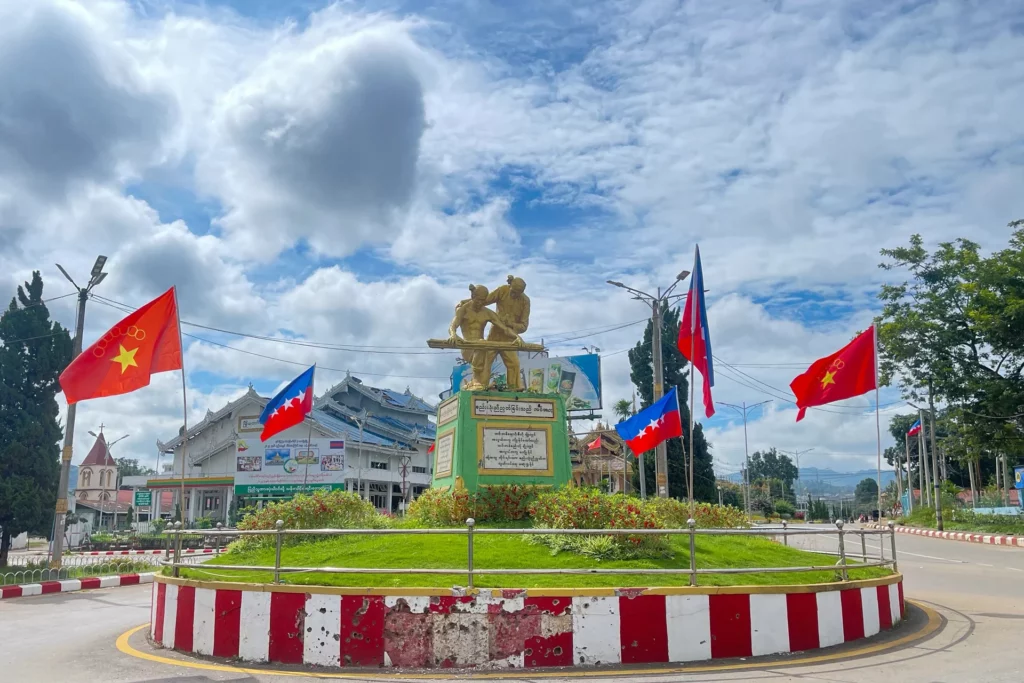
Photo – Arakan Princess Media
Summary

Since February 2025, fighting between the Arakan Army (AA) and the State Administration Council (SAC) in Rakhine State has intensified. The number of displaced persons has increased significantly. Alongside heavy rains and flooding, natural disasters have led to acute food shortages. While humanitarian conditions have worsened, international support remains limited. There are reports that neighboring Bangladesh is discussing the establishment of a humanitarian corridor with the Arakan Army (AA), but disagreements persist. Meanwhile, news that the AA has designated the Paletwa region in Chin State as a district of Rakhine has sparked regional controversy.

The AA is the only Ethnic Armed Organization (EAO) capable of launching offensives from Rakhine to Ayeyarwady, Magway, and Bago regions. With its strategy of “securing an extended yard, building a high fence, and keeping reliable gatekeepers,” the AA is expanding its territorial influence. At the same time, it avoids politically binding “over-talked” alliances and instead builds a network of action-oriented, military-focused junior alliances. The AA’s political objectives remain unclear, maintaining strategic ambiguity—whether it seeks secession, a confederation, or a federal democratic system. Although Rakhine has emerged as a de facto rival power center, it still faces significant challenges.

In the future, the AA faces three major challenges: (1) addressing the Rohingya and Chin issues justly and inclusively, (2) translating military successes into political outcomes and establishing effective governance and economic systems, and (3) managing resource and arms shortages as the conflict prolongs. Failure to address these could undermine public acceptance and the success of building a new vision and order. In external relations, the AA must navigate carefully and equitably to maintain its de facto rival power center status without destabilizing it. Due to differing political objectives among EAOs, it remains unlikely that the northeastern, southeastern, and western corridors will unite to exert political pressure on Naypyitaw or coalesce around a shared vision for a new national framework.
This ISP OnPoint No. 26 (English version), titled “O’ Northern Roads…, Rakhine: A De Facto Rival Power Center” was published on July 17, 2025, as a translation of the original Burmese version published on July 9, 2025. ISP-Myanmar has published a trilogy on Myanmar’s Conflict Resolution that Needs Guardrails and the Future Prospect, and this OnPoint is the third of the three.These are part of the research conducted by the ISP-Myanmar’s Conflict, Peace and Security Studies (CPSS).
“O’ Northern Road…”1
Rakhine: A De Facto Rival Power Center
Myanmar’s Conflict Resolution that Needs Guardrails and the Future Prospect2
∎ Events
Since February 2025, fierce fighting between the Arakan Army (AA) and Myanmar’s junta forces in Kyaukpyu Township, Rakhine State, has displaced more than 20,000 people—within just four months—in a township of scarcely 150,000 residents. According to ISP-Myanmar’s data, over 700,000 people are now internally displaced across AA-controlled areas in Rakhine, representing nearly 23 percent of the state’s 3.2 million population. Meanwhile, nearly one million Rohingya refugees remain in increasingly dire conditions. Rakhine, already highly vulnerable to climate change, has been battered by heavy rains this month, resulting in flooding in several townships, such as Maungdaw and Buthidaung, causing acute food shortages. Hundreds of Rohingya have capsized attempting to flee by sea, while humanitarian conditions in refugee camps continue to deteriorate; despite the dire situations, there is limited international attention on this matter. Bangladesh’s caretaker government has floated idea of humanitarian corridor with United Nations and AA in the area between Rakhine and Bangladesh. But even among Bangladesh’s military, civilian authorities, and political factions, disagreements persist on this matter. Meanwhile, controversies have been sparked by the news that the AA has designated the Paletwa region of the neighbouring Chin State as a district of Rakhine.
ISP On Point No.26
Rakhine: A De Facto Rival Power Center
∎ Preliminary Analysis
The Arakan Army (AA) stands out as the only Ethnic Armed Organization (EAO) in Myanmar capable of projecting force across the country’s northeastern, southeastern, and western conflict corridors, while extending its influence deep into the Dry Zone Anyar Region, the heartland of the Bamar. Based in Rakhine State, the AA has launched coordinated offensives in Ayeyarwady, Magway, and Bago regions—territories beyond the traditional reach of most EAOs. Led by a new generation of leaders, the AA has built the country’s most extensive alliance of armed groups, linking up with young and emerging actors through its “less talk, more action” approach. It plays the role of an senior sibling in a “big brother–little brother” clientelistic relationship— supplying arms, offering training, and serving as a model. No other ethnic armed group has woven such a far-reaching web of influence among the country’s next generation of fighters. (Learn more about Major General Twan Mrat Naing and the Arakan Army’s Three Tactical Innovations in Appendices 1 and 2, respectively.)
AA prefers to avoid a more-talk alliance where it requires binding political commitments, and instead prefers more action-oriented, pragmatic junior military alliances. Its engagement with powerful senior EAOs, such as the United Wa State Army (UWSA), was noticeably confined to arms, ammunition and economic interest.
A review of the AA’s strategy can explain these characteristics: securing an extended yard, putting up a high fence, and keeping reliable gatekeepers. From its stronghold in Rakhine, the group has extended its reach into Chin, Magway, Bago, and Ayeyarwady—shielded by rugged terrain, mountain ranges, and a strategic alliance that forms a protective fence of trusted proxy young armed groups. The strategy has so far proved effective. Still, the AA has yet to clearly articulate the ultimate goal behind this strategy. Buoyed by military victories and growing capacity, Rakhine has become a de facto rival power center—lacking only the stamp of international recognition. Yet questions linger over the group’s long-term ambitions. (1) Does the AA aim to secede and establish an independent state? Or, (2)will it instead push for a confederation or a “one country, two systems” model? Or, (3) might it seek to topple the military regime along with other allies and help build a federal democratic Myanmar? Whichever path it pursues, there will be more challenges ahead. A bid for independence, for instance, would face steep obstacles—not least the State Administration Council’s (SAC) strength in air force and naval, and the near-certain opposition of neighbouring states. These constraints pose serious questions on its chance of success.
If perceptions grow that the AA is no longer focused on ending military dictatorship but is instead pursuing a strategy of “securing an extended yard, a high fence, and reliable gatekeepers”— as seen in the cases of the Kokang Myanmar National Democratic Alliance Army (MNDAA) and Ta’ang National Liberation Army (TNLA) following their military victories—it will inevitably face a fundamental question: is it a liberation force or an army of expansion? This debate is already taking shape among Chin factional groups. If Chin EAOs and PDFs fail to reach an agreement with the AA over the strategically vital town of Paletwa—and if infighting among Chin armed groups continues its dog-eat-dog course—the Chin resistance is likely to remain a marginal player in the broader western theater. Chin’s struggle for equality and justice may endure, but without unity among themselves, its strategic weight will be limited. So far, the AA has deliberately maintained strategic ambiguity over its ultimate political aims. By adopting a “less talk, more action” approach, it has cultivated the largest armed alliance network in the country while avoiding definitive commitments. This calculated vagueness appears designed to preserve flexibility, allowing political decisions to be shaped by evolving opportunities on the ground.
The AA faces three critical challenges, the first of which is normative in nature. It is to address longstanding grievances—particularly regarding the Rohingya and Chin populations—in a manner that is both just and inclusive.
The more victories the AA secures, the more it must grapple with strategic and political dilemmas, alongside three lures in managing external relations as a de facto rival power center. If navigated carefully, these challenges could strengthen Rakhine’s position; if misjudged, they risk strategic overreach. The first of these lures lies in its relationship with the Bamar. Centuries-old grievances over the loss of Arakan sovereignty, compounded by a history of marginalisation under both military rule and the National League for Democracy (NLD) government, have fostered deep distrust. For the AA, engaging with Bamar political actors—whether the junta or pro-democracy forces—is fraught with difficulty, yet avoiding them altogether is hardly viable. Like fire, this relationship has the potential to illuminate or to consume, depending on how it is handled.
The second external relations lure for the AA lies in its relations with other Ethnic Armed Organisations (EAOs). AA prefers to avoid a more-talk alliance where it requires binding political commitments, and instead prefers more action-oriented, pragmatic junior military alliances. Its engagement with powerful senior EAOs, such as the United Wa State Army (UWSA), was noticeably confined to arms, ammunition and economic interest. Though such narrow military alliances as the 3BHA have their limits, they appear sufficient for the AA’s current objectives. AA’s strategic decisions are driven not by the tempo and conflict calendar of political alliance but by their own internal assessments and long-term calculations. Up until 18 months after the coup, the AA had intentionally avoided direct confrontation with the junta, focusing instead on consolidating strength, building networks, and stockpiling resources. Even as it took a leading role in Operation 1027, its subsequent offensives in Rakhine from November 2023 were carefully decoupled from the branding of Operation 1027 and distanced itself from the broader narratives of the Spring Revolution. The third external relations lure for the AA concerns how it navigates relations with and approach from Western governments. On the one hand, it cannot disregard international human rights norms and legal standards; on the other, fully embracing them risks entanglement in what AA leaders informally call the too much talk like NGOs political dilemma. Even more delicate are relations with neighboring Bangladesh and India, which share borders with Rakhine. Both currently acknowledge the AA as the de facto authority in the region, but there is still a critical question whether this is merely a diplomatic fig leaf or the start of more durable recognition. Nonetheless, both are unavoidable neighbors for the AA (Read more about the challenge of the Rohingya issue in Appendix 3).
The AA faces three critical challenges, the first of which is normative in nature. It is to address longstanding grievances—particularly regarding the Rohingya and Chin populations—in a manner that is both just and inclusive. Before AA could resolve these issues, there are chances of more tensions inflamed, provoking impulsive decisions, or prompting other actors to score political points under the guise of assistance, without meaningfully addressing the underlying problem. Such tactical quagmires are already surfacing—and more are likely to follow. In parallel, the humanitarian crisis in Rakhine—driven by both protracted conflict and climate-related disasters—continues to deepen. If left unmanaged,it risks becoming another source of grievance. Most critically, addressing these challenges not only through revolutionary means but also by articulating and building a better alternative vision and order will be key to securing the legitimacy of both the AA and Rakhine.
The AA faces a second, distinctly strategic challenge. As previously analysed, its strategy footprint could be characterised as “securing an extended yard, a high fence, and reliable gatekeepers.” Yet the core question remains: can the AA translate its military victories into tangible political outcomes? Its “less talk, more action” approach has so far allowed it to maintain strategic ambiguity regarding long-term political ambitions. But without delivering secure, effective and representative governance, and meeting basic service delivery expectations in the short to medium term—legitimacy crisis may quickly unravel. Beyond immediate fixes in politics, governance, and public services, the AA must incorporate an economic strategy into its broader strategic calculus. Unless it addresses immediate livelihood needs, builds core infrastructure, and develops a functioning economy that creates jobs beyond extractive industries, AA risks entrenching socio-economic vulnerabilities. Such shortcomings could corrode not only the legitimacy of its alternative vision and order but also its performance legitimacy, where competence and delivery are the currency of authority (Read more about Rakhine’s socioeconomic situations in Appendix 4). A further strategic dilemma lies in its posture toward China. As part of its two-ocean strategy, Beijing seeks dependable access to the Indian Ocean.It engages the AA with caution and calculation, clearly playing a long game. Like other players, the Bamar, the Shan, and the Kachin, the people of Rakhine must craft a calibrated China policy aligned with evolving geopolitical realities—a strategic challenge with little room for error.
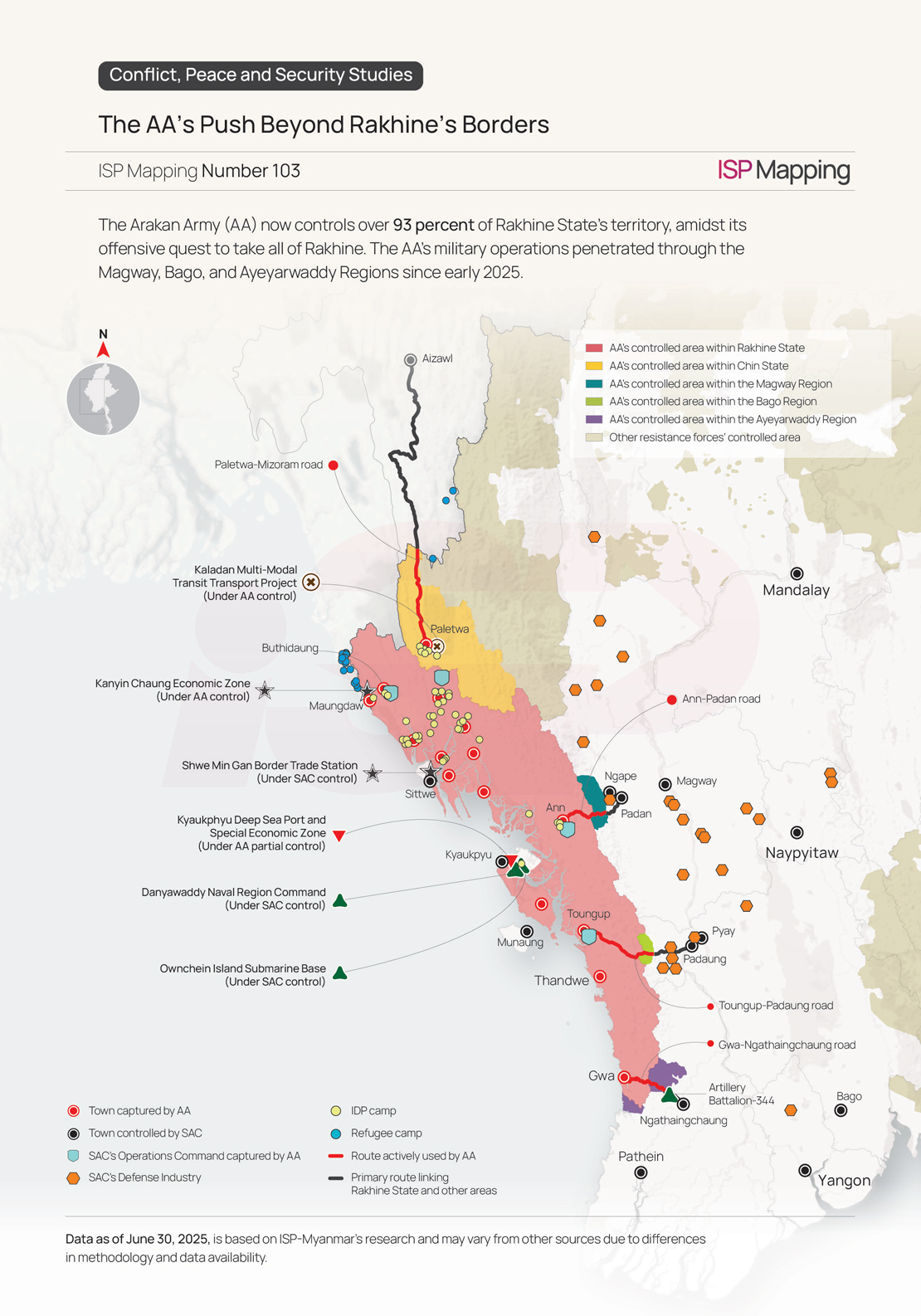


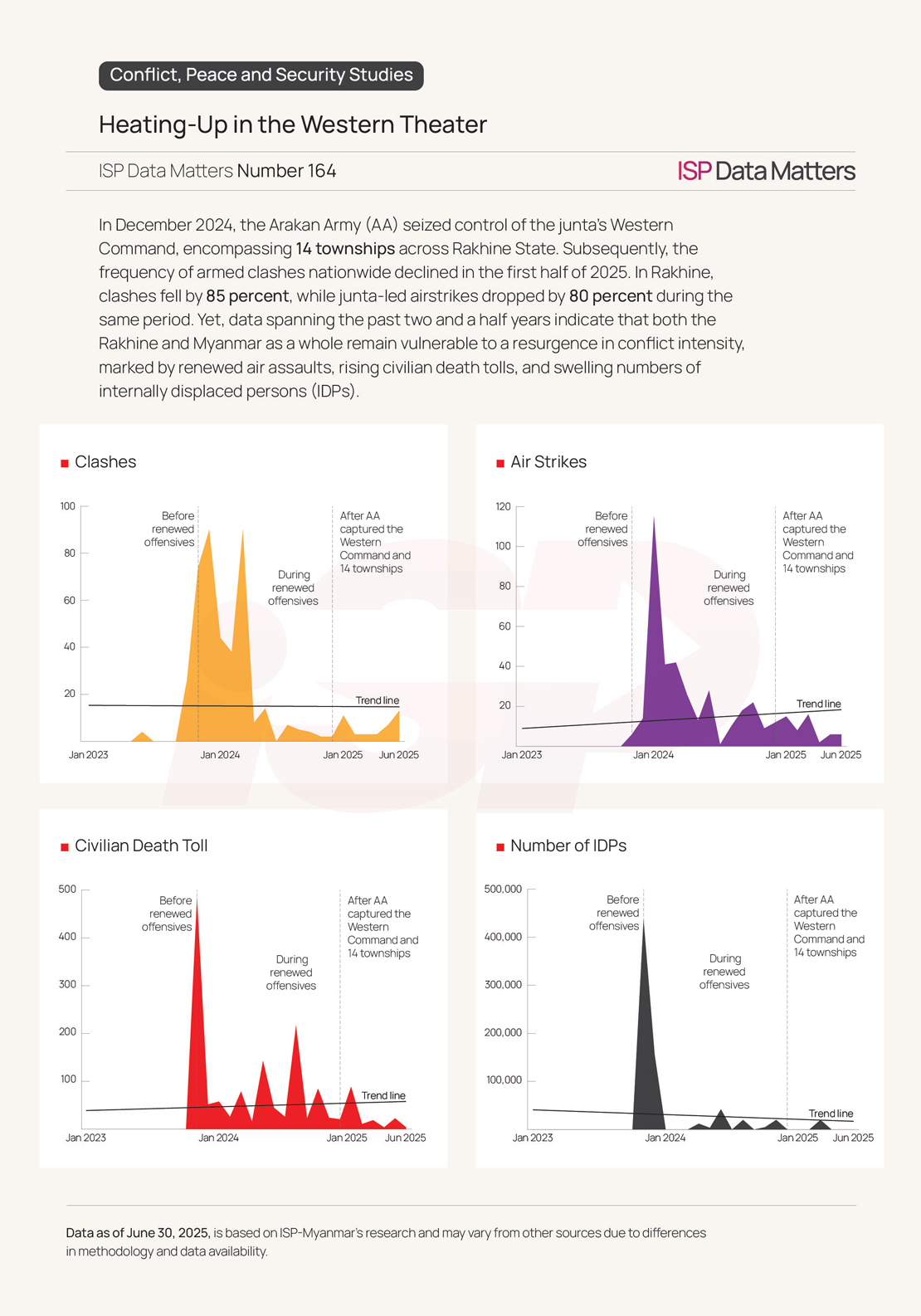
The third challenge for the AA is tactical. As the conflict endures and regional actors—most notably China—tighten restrictions on the flow of arms and resources, the AA’s extended frontlines risk becoming a liability for overstretching its logistics. To encircle the Myanmar regime, the AA must not only equip its own operations in Rakhine but also support allied offensives elsewhere. Its preferred alliance model— “less talk, more action”— focuses on cultivating junior partners rather than building politically binding coalitions with senior resourceful groups. While this offers operational flexibility, it also imposes logistical burdens. The AA bears the lion’s share not only of supplying arms and resources but also of providing leadership—a precarious position as resources dwindle. As scarcity deepens, competition for priority may expose weaknesses in the alliance structure, thereby increasing the risk of infiltration or collapse. Situations are inherently too difficult to overcome, especially when critical support falters. While the AA may face mounting resource constraints, the junta still maintains its capacity through superiority in air and naval power, expanded troop recruitment via conscription, and a blockade of essential supplies to Rakhine State. Moreover, allegations of the AA’s involvement in the conflict economy—most notably in narcotics trafficking—pose reputational risks that could erode its standing as well as haunt in later future. The analysis thus far covers the strategic doctrine, political ambitions, external relations, and key challenges of the AA, the dominant force in Myanmar’s western conflict theater.
∎ Scenario Forecast
Although Rakhine has yet to be recognized under international laws, it has emerged as a de facto rival power center, effectively serving as a rival center of power. The Arakan Army’s (AA) leadership has consistently demonstrated operational effectiveness and acumen, earning widespread recognition for its capabilities. Meanwhile, Myanmar’s trajectory over the next decade is unlikely to converge into a single peace process and unified future. Multiple processes and various future options for conflict resolution will certainly exist. Whichever means the country’s northeastern and southeastern corridors, armed resistance groups, the National Unity Government (NUG), and domestic political coalitions may pursue – through warfare, dialogue, or electoral pathways, the AA and the United Wa State Army (UWSA) will continue to keep their distance. Only once the mainstream political process gains success and momentum will they weigh the merits of engagement— whether to integrate, align, or remain apart.
For the foreseeable future, Myanmar’s political landscape will continue to be defined by
multiple pathways— each forged and followed independently according to distinct aspirations
and priorities. It is crucial to minimize conflicts between parallel paths and prevent clashes among competing futures.
Given their divergent political objectives, the northeastern, southeastern, and western corridors are unlikely to unite in exerting political pressure on Naypyitaw or in coalescing around a shared vision for a new national framework. Although the Rakhine resistance initially emerged in Laiza, where Kachin Independence Organization (KIO) headquartered, in the northeast; “the Northern road” is unlikely to evolve into a nationally interconnected movement. For the foreseeable future, Myanmar’s political landscape will continue to be defined by multiple pathways—each forged and followed independently according to distinct aspirations and priorities. It is crucial to minimize conflicts between parallel paths and prevent clashes among competing futures. Additionally, the three external relations lures—Rakhine-Bamar relationship, ties with other EAOs, and engagement with India, Bangladesh, and Western powers— can serve as guardrails to sensitize and make the AA aware of realities. For the militarily proven AA, this could serve as a test of foresight and restraint.
Appendix-1

🔸Arakan Leader Major General Twan Mrat Naing
At 47, Maj. Gen. Twan Mrat Naing serves as the Commander-in-Chief of the Arakan Army (AA) and chairs its political wing, the United League of Arakan (ULA). Among the cadre of resistance leaders shaped by the modern Rakhine revolution, he is widely regarded as the most militarily accomplished and politically influential, particularly among the Rakhine population. His political activism dates back to the early 2000s, when he worked as a tour guide while actively engaging in underground Rakhine nationalist networks. During this time, he also established connections with various ethnic armed organizations in pursuit of forming a new armed group. He spent years living along the Indian and Thai border areas, and in 2009, while based in Laiza—the stronghold of the Kachin Independence Organization (KIO)—he formally founded the Arakan Army (AA).
From his earliest involvement in the Rakhine nationalist movement, Twan Mrat Naing positioned himself as a vocal critic of Rakhine as a lackey of Bamar politics. After founding the AA, he introduced the twin doctrines —“Arakan Dream 2020” and “The Way of Rakhita”, marking the new phase in the Rakhine revolution. Even during his pre-fame years, he was respected within allied circles for his discipline, cordial manner, strategic acuity, tireless work ethic, courage, and loyalty. Over time, he has cultivated a reputation for strategic patience and reciprocal pragmatism, offering military assistance to partners when they need it. Internally, Twan Mrat Naing is credited with professionalizing the AA’s command structures, fostering unit cohesion, and consolidating his widely accepted leadership. His keen interest in science and technology has influenced the AA’s structural modernization and combat capabilities. While his broader political blueprint remains deliberately ambiguous, he has publicly floated a confederation vision. His tenure, however, is not without controversy, particularly regarding the AA’s stance on the Rohingya and his sometimes emotionally charged social‑media posts.
Appendix-2
🔸Arakan Army’s Three Tactical Innovations
The Arakan Army (AA) fighters who first entered Rakhine honed their battlefield skills on the frontlines of Kachin and Kokang. However, once inside Rakhine, they recalibrated their tactics to suit the region’s distinct terrain, adjusting their strategies, bases, and troop deployments. In one notable instance, the junta’s naval superiority, once seen as a strategic asset, has proved less effective than anticipated in Rakhine. Following a bruising defeat in Kyauktaw Township, the junta’s three retreating naval vessels were intercepted and sunk by AA forces on the Kaladan River. This capacity to exploit the natural landscape—to maneuver seamlessly through jungle, mountain, and waterway—has become the hallmark of the AA’s tactical strength.
The AA’s second major strength lies in its mastery of encirclement tactics. Whether in defense or offense, the AA makes extensive use of trench networks—some stretching for miles—to isolate and besiege junta outposts perched on mountain ridges or sprawled across open plains. Rather than launching direct assaults reliant on sheer manpower, the AA methodically surrounds its targets, cutting them off for weeks or even months. These fortified trenches not only blunt the impact of aerial bombardment but also serve as lifelines for sustaining frontline logistics, enabling prolonged operations with minimal exposure to harm.
The third strategic asset lies in its battle-hardened army and systematic cultivation of battlefield morale. Central to this approach is a strict operational ethic: no injured or fallen comrade is left behind. This practice not only reinforces cohesion and psychological resilience among troops but also minimizes the risk of intelligence breaches, ensuring that the capture of personnel or sensitive information by enemy forces is kept to a minimum.
Appendix-3
🔸The Rohingya Challenge
The presence of the Rohingya in northern Rakhine poses a significant governance challenge for the Arakan Army (AA). While AA leaders do not contest the Rohingya’s citizenship or human rights, they remain uncompromising on matters of identity, historical narrative, and calls for self-governance—areas where tensions persist. Rohingya organizations continue to be viewed by the AA as potential security risks, and efforts to foster social cohesion remain fraught. International observers have noted that patterns of institutionalized discrimination persist. Recent proposals by Bangladesh’s interim leader, Muhammad Yunus, and former Prime Minister Sheikh Hasina to establish a “safe zone” in Rakhine have been dismissed by AA officials as going too far. Meanwhile, Myanmar remains the subject of proceedings at the International Court of Justice (ICJ) over allegations of genocide—charges that the United States formally recognized in 2022.
In its June 18, 2025 report, Bangladesh/Myanmar: The Dangers of a Rohingya Insurgency, the International Crisis Group (ICG) cautioned that any escalation of Rohingya armed resistance against the AA is likely to backfire—intensifying intercommunal tensions in Rakhine and further undermining the already slim prospects of repatriation for nearly one million Rohingya refugees stranded in Bangladesh. The report came on the heels of reports that, in November 2024, Rohingya factions had forged a unity pact, calling for retaliation and framing their struggle as a religious jihad against the AA. Along the Bangladesh–Myanmar border, three Rohingya militants—the Arakan Rohingya Salvation Army (ARSA), the Rohingya Solidarity Organisation (RSO), and the Arakan Rohingya Army (ARA)—are known to operate with varying degrees of capacity and support.
Appendix-4
🔸Rakhine’s Socioeconomic Landscape
Despite its coastline and wealth of natural gas and other resources, Rakhine remains one of Myanmar’s poorest regions. In 2023, the United Nations Development Programme (UNDP) estimated that two-thirds( 66.9 percent) of the state’s population lived below the poverty line, the second most impoverished in Myanmar, compared to a national average of 49.7 percent. By 2025, the UNDP assessed that 95 percent of Rakhine’s population had slipped into what it termed “regress into survival mode,” a condition driven by chronic resource scarcity and deepening conflict.
Agricultural productivity remains dismally low, hampered by restricted access to fertilizers and persistent insecurity. Clashes across the state have disrupted farming and decimated fishing livelihoods. On top of the longstanding Rohingya crisis, Rakhine hosts a significant number of internally displaced persons (IDPs), with basic healthcare, medicine, and nutrition in critically short supply.
Economic paralysis has followed: jobs are scarce, trade routes are severed, inflation is rampant, and military-imposed blockades have brought formal commerce to a standstill. The UNDP has warned that in 2025, some two million people in Rakhine could face famine, with the region’s economic architecture nearing collapse. Electricity, drinking water, sanitation, and children’s education remain almost inaccessible. Extreme weather events also threaten every year. As far back as 2017, the Advisory Commission on Rakhine State, chaired by former UN Secretary-General Kofi Annan, identified the crisis as having threefold dimensions: humanitarian, socio-economic, and rooted in systemic human rights abuses.
ISP On Point No.26
Rakhine: A De Facto Rival Power Center
Footnotes
- The phrase of this OnPoint’s title “O’… Northern Road…” is taken from the Muse-Namkham Road [song] composed and sung by famous Shan singer Sai Hsai Mao. ↩︎
- ISP-Myanmar is concluding its trilogy on Myanmar’s Conflict Resolution that Needs Guardrails and the Future Prospect with this final OnPoint publication, the third of the series. ↩︎