
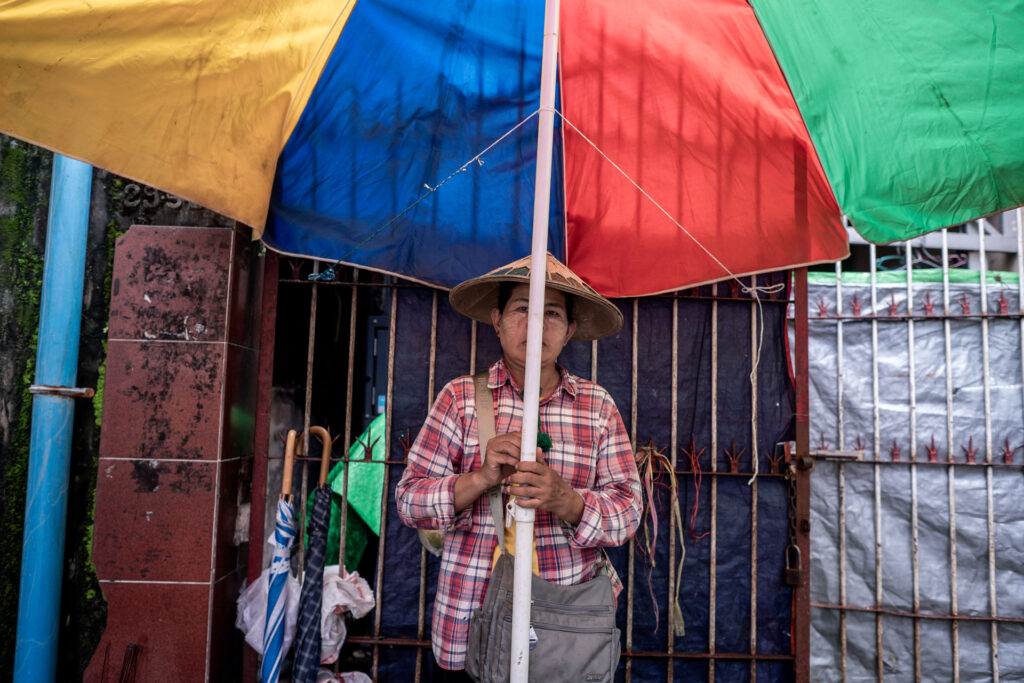
Photo – AFP
On October 18, 2025, ISP-Myanmar held its tenth 30 Minutes with the ISP event, titled “The Spirit is Willing, but the Flesh is Weak: The Socioeconomic Cost of Myanmar’s Disrupted Trade Routes.” This English translation of the event’s recap memo was published on November 7, 2025. The original Burmese version was published on October 30, 2025. This publication is part of research conducted under ISP-Myanmar’s Socioeconomic Studies.
The Spirit is Willing, but the Flesh is Weak: The Socioeconomic Cost of Myanmar’s Disrupted Trade Routes
▪️Concept Note
Since the 2021 military coup, the military junta has prioritized its own ‘survival’ above all else. Efforts intended for the public’s socioeconomic development and the provision of public goods have not yielded the expected results. The rapid development by a decade of economic opening and liberalization established before the coup, have also been reversed. It has faced renewed international sanctions. When trade deficits occurred, it resorted to restricting foreign imports, using various methods to forcibly compel remittances from migrant workers, controlling foreign exchange rates, and restricting key commodities in border trade. The junta’s economic policies has disrupted the entire economic system and caused widespread chaos. At the same time, major trade routes were disrupted by the nationwide armed conflict, halting the flow of goods for long periods. Additionally, China’s ‘five cuts’ policy—implemented to pressure ethnic armed groups in northeastern Myanmar—also had a significant impact on trade disruptions.
It is crucial to study how these conditions are impacting the public’s already dire livelihoods, how people are struggling to cope with it, and what reliable assistance, if any, they are still receiving. To understand these issues, ISP-Myanmar conducted a brief survey polling 1,015 respondents across 85 townships nationwide. It was designed to be all-encompassing, including residents of urban and rural areas, IDP camps, and townships declared under martial law. The questions were specifically aimed at understanding the nature of trade and business disruptions and their impacts over the last 60 days. While some respondents said they were facing a hopeless situation, others expressed determination, stating they could continue to struggle on.
What is remarkable is seeing the public’s resilience. The current shortages are a result of the weakness and failure of the institutions. However, not only do these institutions fail to provide support, but they sometimes even make matters worse. We mostly observed individuals struggling on their own or people within communities supporting each other to get by. Furthermore, the majority of survey respondents are not just hoping for handouts. They want jobs, they want income; they believe that if they have these, they can solve the socioeconomic hardships they face. Looking at this, the people enduring various hardships caused by institutional failures are not showing weakness but demonstrating remarkable physical and mental strength. We can liken these strengths to the spirit expressed in the song “Gyo Gyar Than,” (meaning “The Song of Cranes”). Physical strength reflects their capacity to withstand hardship, while mental strength represents the courage and determination to confront challenges and find ways to overcome them. However, only when this strength and pride are in balance can the quality of resilience be sustained meaningfully and steadfastly. In this episode of 30 Minutes with the ISP, we presented and discussed, from a research perspective and based on our survey data, the public’s resilience amid domestic trade route blockades.
Greetings to all the Gabyin members joining us today for another episode of 30 Minutes with the ISP. I’m Zaw Htet, and I’ll be your host for today’s discussion. Our topic for this session is “The Spirit is Willing, but the Flesh is Weak: The Socioeconomic Cost of Myanmar’s Disrupted Trade Routes.” The Burmese title “capacity and mental strength must be balanced” originates from the well-known Burmese song “Gyo Gyar Than,” written by composer Inzali Maung Maung and sung by famous pop singer Khin Maung Toe.
Now, let me introduce our panelists for today’s discussion. Leading the discussion are three of ISP-Myanmar’s emerging researchers: Yee Mon, Ko Khant, and Su Linn Han, who will share their insights on the socioeconomic cost of disrupted trade routes across the country. After the presentations, we’ll open the floor for your questions and comments. You’re welcome to ask questions live or send them through the Chat or Q&A features. If we can’t address every question during this live session, we’ll make sure to follow up via email afterward. Before we begin, we’d like to kindly remind everyone to keep your comments respectful. Please avoid any form of hate speech or remarks that discriminate based on race, religion, gender, or sexual orientation, or political opinion.We have also shared these rules in the chat. With that, let’s get started. The floor is yours, panelists.

A warm welcome to all Gabyin members joining us for today’s program. First of all, thank you for taking the time to be here with us. More than four years have passed since the coup, and the hardships faced by the people of Myanmar remain immense. Yet amid these challenges, the resilience and determination of the people have been truly remarkable. Still, the reality is that a clear path out of these hardships remains difficult to find. Today, the people continue to bear the weight of multiple crises: natural disasters such as the recent Sagaing–Mandalay earthquake, and man-made disasters stemming from the ongoing armed conflict. Trade disruptions, blockades, and economic stagnation have further deepened the suffering. To make matters worse, even when people have money to buy, there are no goods to sell. This leaves many struggling to meet their most essential needs.
So, the State Security and Peace Commission’s (SSPC) economic mismanagement has made an already bad situation even worse. In this ongoing crisis—especially with trade routes disrupted—what’s really happening to people’s livelihoods? How are they managing it? And are they getting help, if there is any? To better understand these questions, ISP-Myanmar recently conducted a short survey, interviewing over 1,000 people nationwide. In today’s discussion, we’ll walk you through the findings on how people are struggling and adapting in this difficult time. When we present this, we’ll go through it in three parts. First, we’ll look at the current hardships people are facing, and the structural problems behind them. The second part explores how impact and resilience differ across regions. And the third part focuses on how people are coping and finding their own solutions in the face of these challenges. These aren’t just short-term personal problems; they’re long-term societal issues that could shape Myanmar’s future in deep and lasting ways.
So, let’s start with the first part: the current hardships and the structural root causes. What’s happening around us and how people are coping with these challenges, we will discuss this based on our ISP-Myanmar’s survey findings.
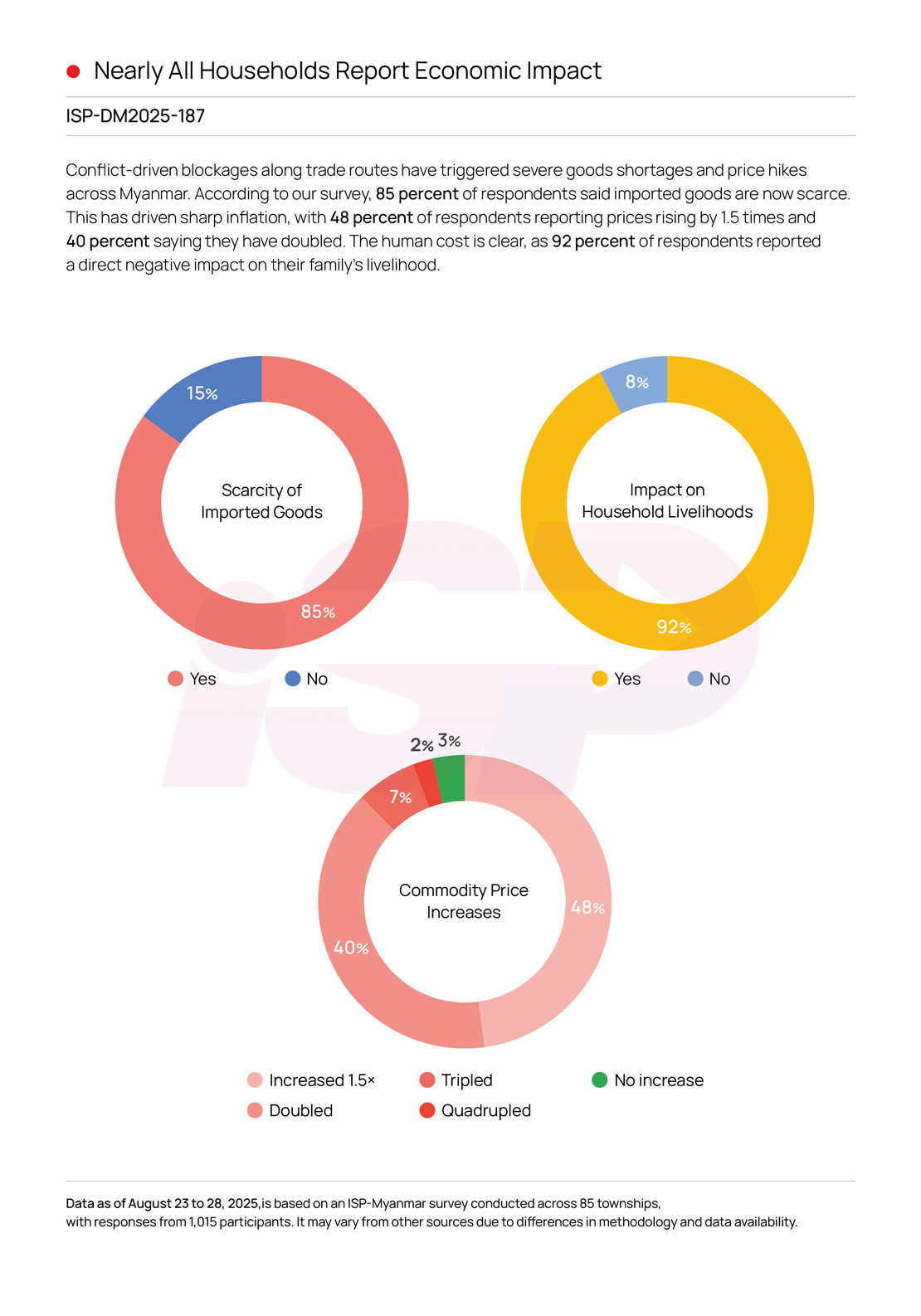
As you can see on the slide, about 85 percent of respondents reported shortages of imported goods due to trade route blockages. That’s roughly 850 out of 1,000 people. This disruption has also had a serious impact on household livelihoods, with 92 percent of respondents reporting that their family income has been affected. And inflation, which everyone is talking about, has caused prices to rise anywhere from one-and-a-half times to three times, and in some areas even more than four times. If we look closely at the slide, we can see which goods became scarce and more expensive.
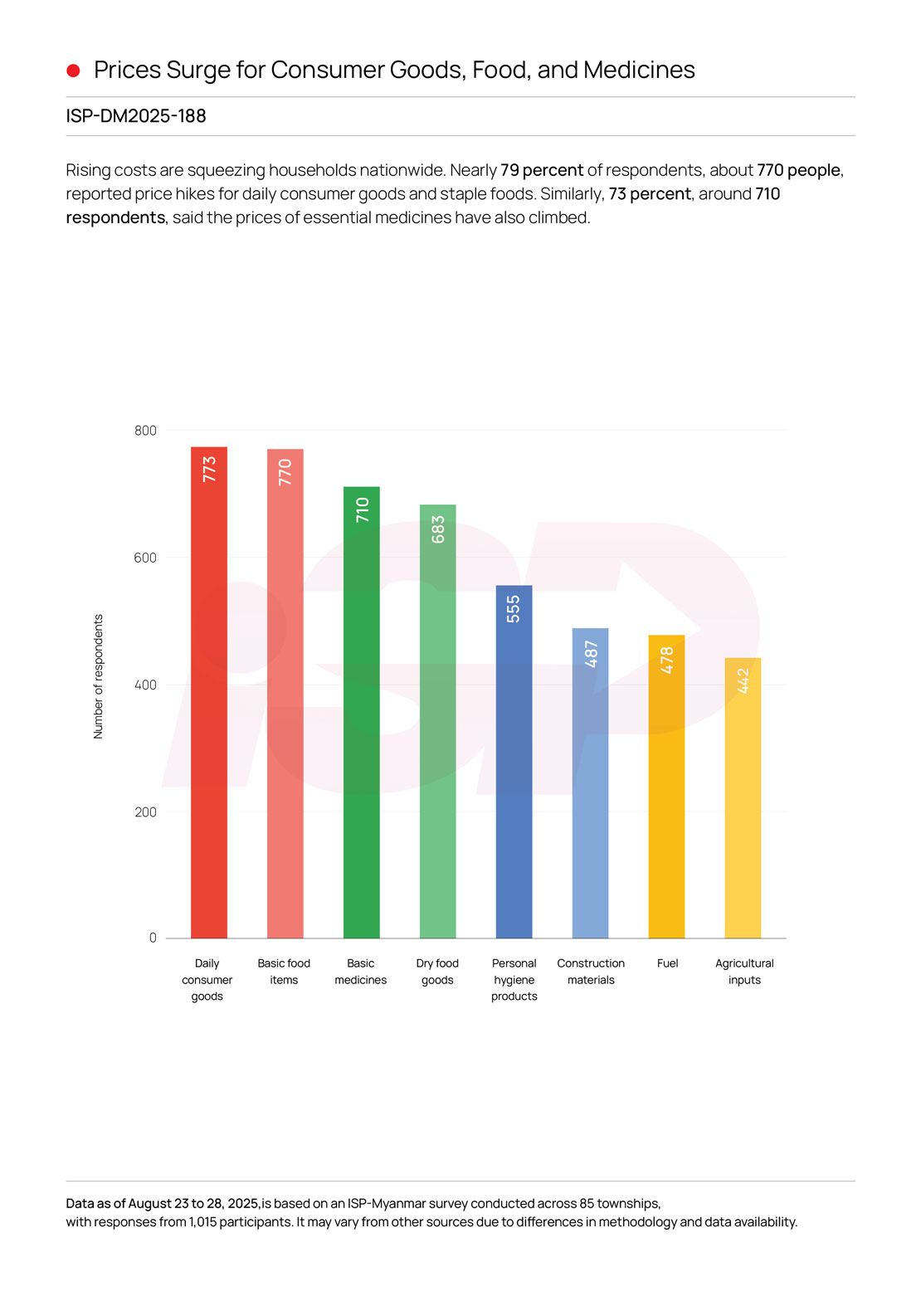
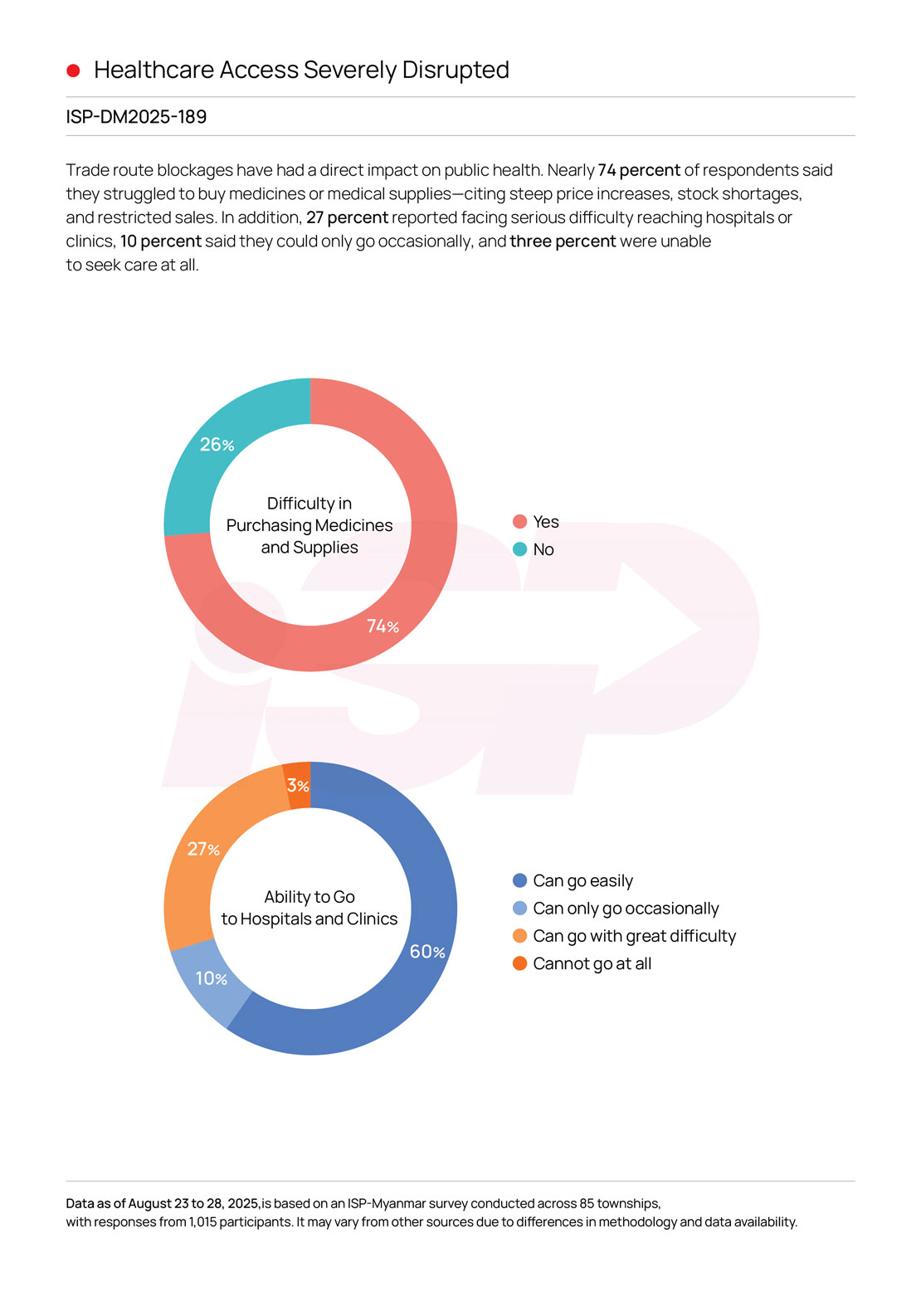
The hardest hit were basic food items and everyday consumer products. We also found that medicine shortages are widespread. Altogether, these findings paint a troubling picture. In addition, crises such as trade route blockages caused by armed conflict are also affecting the health and education sectors badly. As you can see on the slide, 74 percent of respondents said they have difficulty even buying medicine. So, when people get sick, can they still easily go to hospitals or clinics? Most respondents said they can still go, but some said they can only go from time to time, while others said it has become very difficult. The situations were quite serious. You can see it is also reflected in our data slide.
When we talked with our researchers across the country, we also found that access to education was facing a major challenge. Because earning a living has taken priority over schooling, some families can no longer afford to send their children to school. Instead, more and more children are being sent to work to help support their families. Some children are unable to attend school, fearing the junta’s airstrikes or because schools have been compelled to shut down. At the same time, many young people are fleeing the country because of the conscription law and the fear of being forcibly recruited. Looking at all these situations, we can see that beyond the immediate hardships, Myanmar is also facing long-term problems that could harm both the country’s future and individuals’ lives.
What I mean by that is, people across the country are boxing with immediate hardships on their own. At the same time, they are also facing long-term challenges that affect the whole society and could threaten both their personal futures and the country’s future. On the other hand, the sense of community and cooperation within each community are almost gone. We also keep hearing heartbreaking stories of families being separated, parents from children, husbands from wives. The resilience to endure all these, the level of resilience differs from person to person and from place to place. Their coping strategies to these difficulties also vary. Ko Khant will discuss these points in more detail in the second part of our presentation.
Thank you, Yee Mon. So, you have described a comprehensive picture of the immediate hardships and the deeper structural problems behind them. I’ll pick up from there by looking at how these challenges affect people in different ways, and how their ability to cope varies from place to place. In our survey, we’ve gathered responses from people living in 85 townships across the country. Our survey analysis and follow-up discussions with local researchers revealed one clear point: the damages of these hardships, and the level of resilience people showed in facing them, are far from the same. Here, resilience largely depends on where people live — between different regions, between rural and urban, and between areas under varying intensities of conflict. As you can see on the slide, for example, in high-intensity conflict areas like Demoso and Chaung-U, situations are especially severe.
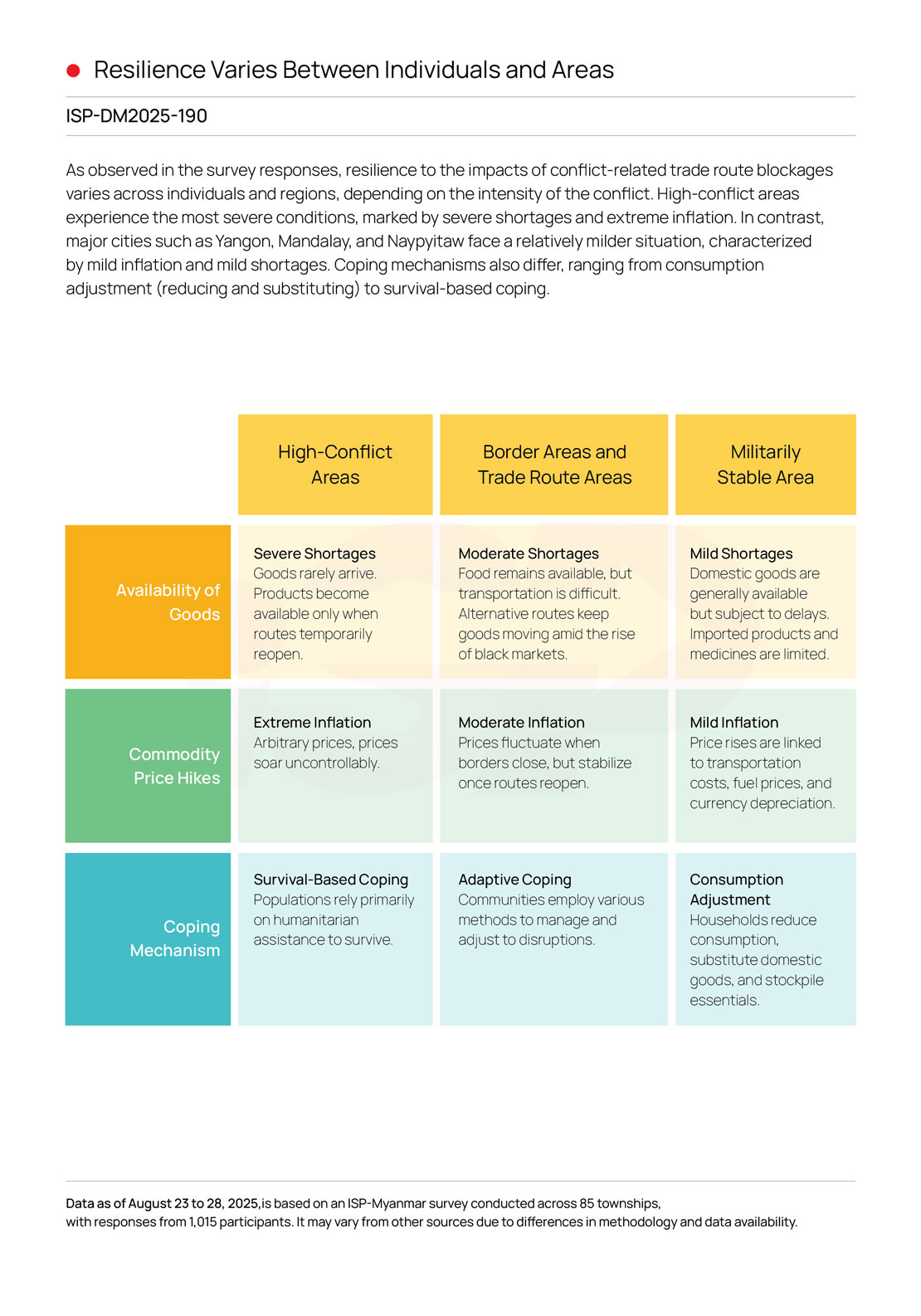
The availability of goods is extremely limited, and price increases are out of control. There’s no real market price—just whatever sellers feel like charging. The coping strategy in those places is to survive, just not to die from starvation. Many depend completely on humanitarian aid: basically surviving on charities, just to make it through each day.Secondly, in areas with favorable trade routes, especially border towns like Muse and Myawaddy, the situation could be described as moderate. Things are somewhat better there, but people still struggle when border crossings are closed or when new restrictions are imposed. Even so, they’re able to manage and adapt in different ways to get by. Finally, in major cities like Yangon, Mandalay, and Naypyitaw, conditions are relatively more stable. But like everyone else, people there are also experiencing shortages of imported goods and medicines. One relieving factor is that domestic products could be used as substitutes in these areas. Even so, people are paying much higher prices due to transportation costs and a weakening currency. Some traders have also started stockpiling goods and only selling them during emergencies. When that happens, it’s the buyers who suffer, forced to pay extremely high prices. As Yee Mon mentioned earlier, commodity prices can become outrageously high. So overall, the level of impact depends on the region.
Amidst these varying impacts, if we are to speak of the public’s resilience, we need to remember that it is not limitless. In other words, when we talk about resilience, there is a ceiling, a limit. I want to illustrate this by comparing two of our survey results. The first question we asked was: “Compared to last year, do you feel that your family has enough income to cover basic needs?” If you look at the slide, 89 percent of respondents said they do not feel they have enough.
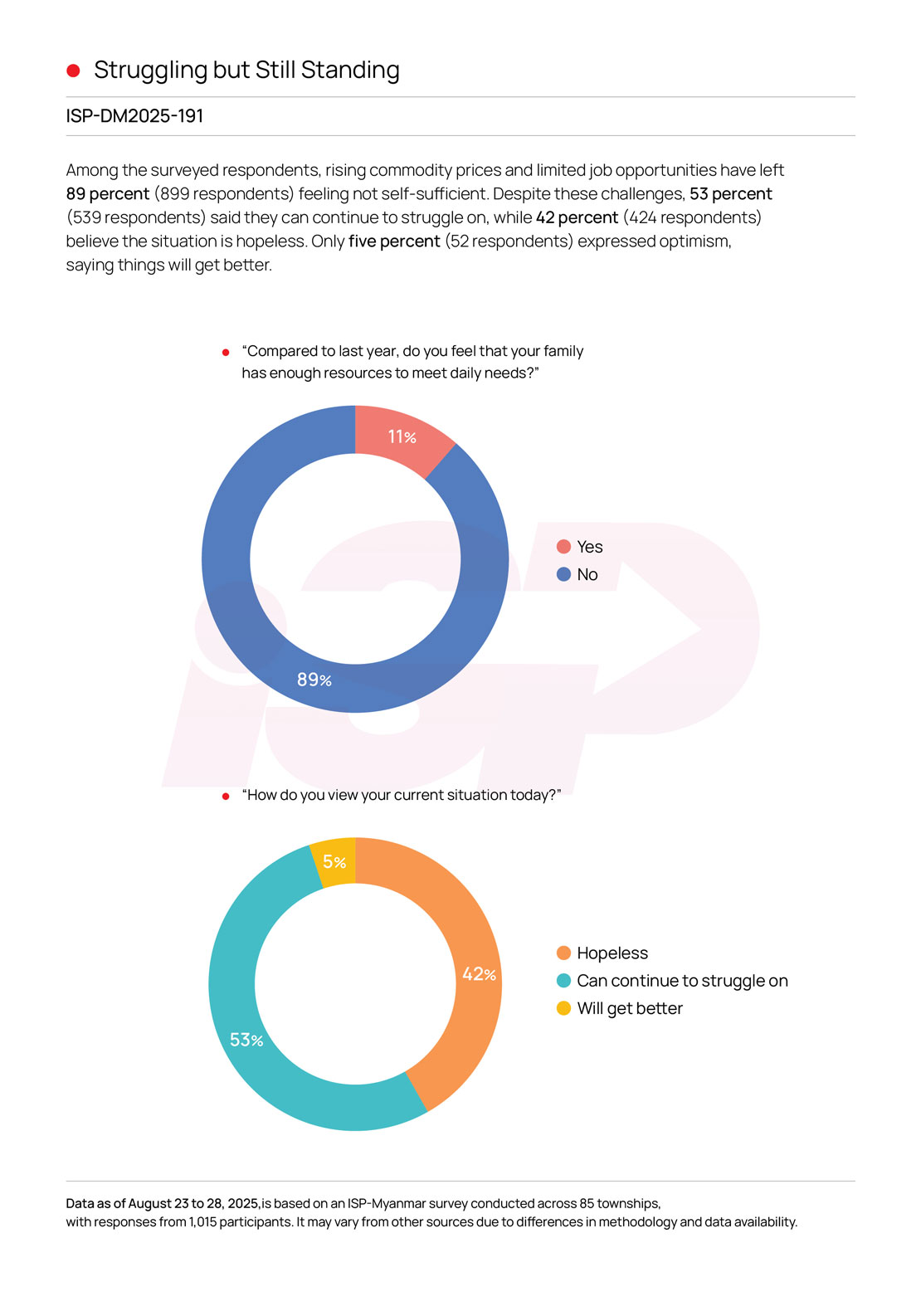
So, we asked a follow-up question: How do you view the current situation? Here, 42 percent said the situation feels hopeless, while 53 percent said they can continue to struggle on. From these responses, we can see that people’s resilience is still there, but it’s fragile. It shows that many are holding on, yet could collapse at any moment. There are two key points we can take away from this.
The first point to notice is that since this is an opinion survey, the answers are often relative. What does that mean? Even when respondents are going through difficult times themselves, they’re aware that people around them are also struggling. In those moments, they might think, “My problems aren’t as bad as others’,” and choose not to express their own hardships, seeing them as nothing unusual. Some even try to comfort themselves by thinking, “Others have it worse than I do.”
The second point is that in answering these questions, many people don’t want to be seen as weak. This comes from the social pressure created by cultural expectations of what resilience should look like. For example, as is often said in our culture, “You’re a man, why are you crying? Men don’t cry.” Because of this mindset, people fear being judged if they show vulnerability or admit to struggling. So, they appear to be strong instead. In doing so, they often hide their real hardships and become trapped within the social norms that define what it means to be “resilient.” When we talk about people’s resilience, we have to remember that it has limits; it can only stretch so far before it breaks. If the crisis deepens beyond a certain point, that resilience could collapse. What I’ve discussed so far is that when people face immediate hardships, their ability to cope varies from person to person and from region to region. So, while some believe they can keep struggling through this crisis, policymakers on all sides need to recognize that there’s also a large group who already feel hopeless. Why? Because there are bounds to people’s resilience. Many people are hanging by a thread and could reach a breaking point at any time. Next, Su Linn Han will discuss how people are coping with these challenges in their daily lives.
Thank you, Ko Khant. In this difficult time, how are people coping with the hardships they face? What drives their determination to overcome these struggles? And how capable is the country’s system in supporting them? These are the questions I’ll be discussing. To describe this situation, I’d like to borrow the titles of two novels by the famous Burmese author Moe Moe (Inya): “We live in Myanmar,” and “Stumbling on a Lost Path.” Even so, our people keep searching for a way forward, hoping to find light at the end of the tunnel. What we see now is that survival has become the top priority. Whether the methods people use are right or wrong no longer matters — what matters is simply getting through each day. In the survey we conducted, we asked people how they are coping with the hardships they face.
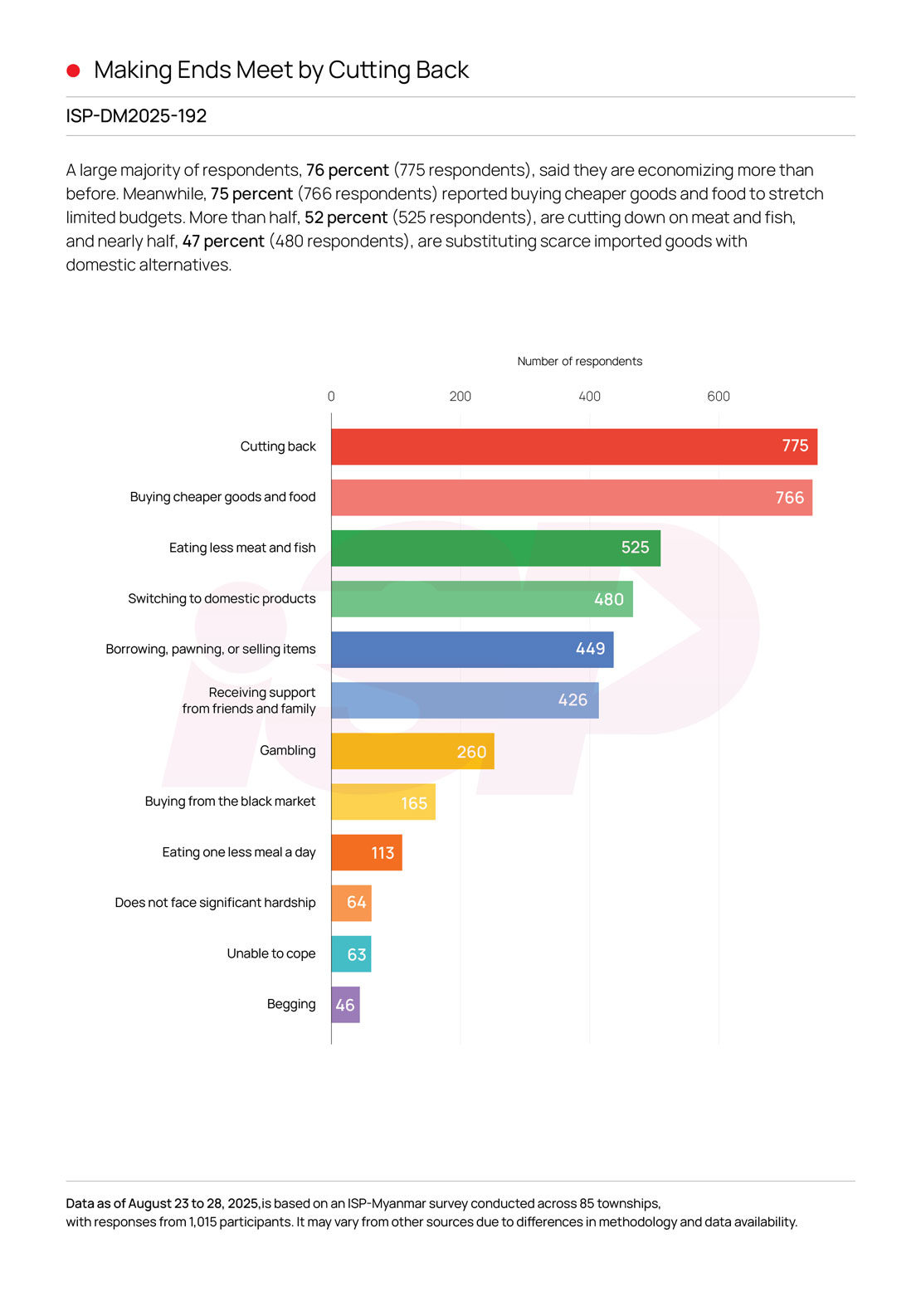
As you can see on the slide, many have had to change their eating habits. They skip meals, eat more vegetables, and choose cheaper food items, and they’re doing these things more frequently now. Even with such adjustments, being debt-free has become rare. To achieve a healthy lifestyle or focus on personal well-being is almost impossible. There are no job opportunities, and the rule of law has largely collapsed. On top of that, gambling activities like the two-digit and three-digit lotteries and slot games have become a kind of escape, pushing people even deeper into the quicksand of debt. What’s worse is that people knowingly take whatever work they can find, even when they know it’s harmful or exploitative. For instance, many are aware that the Kyar Phyant operations are scam syndicates, inhumane, criminal enterprises. Yet, out of desperation, they still choose to work there. It’s almost as if, just as people once rushed to Hpakant for gem mining, now they’re rushing to Kyar Phyant for survival.
In connection with this, we’re also seeing jobs like sex workers and so-called “date girl” work being taken up by people of all ages. In some high-conflict areas, we’ve even heard that parents are sending their underage children to work in KTVs. Some have turned to sex work, using their own bodies just to support their families and cover basic living expenses. It’s fair to say that what some young women in the Ayeyarwady Region went through after Cyclone Nargis is now being experienced by women across the country. So, this raises an important question: Who is helping to address the difficulties and hardships that people are facing today?
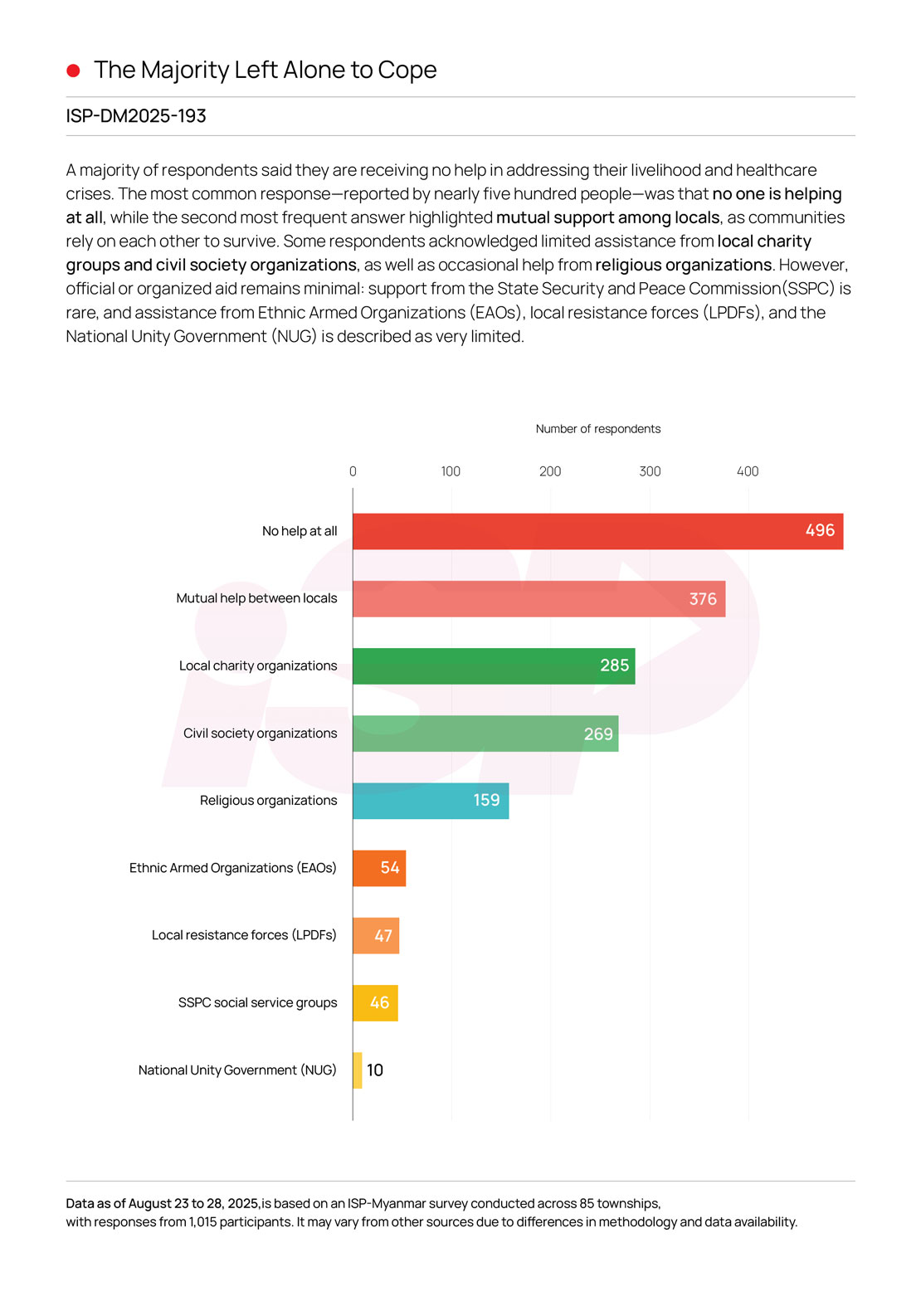
As you can see on the slide, according to our survey, the most common response was that no one is helping to solve these problems. People said they only have one another to rely on. Local charity groups, civil society organizations, and religious groups also provide some assistance, but their resources are very limited. What’s even more concerning is the role of institutions. We found that the SAC/SSPC, which claims to be the incumbent government, has minimal capacity to provide real support. Likewise, the ability of groups such as EAOs, PDFs, LPDFs, and even the NUG to deliver assistance is very limited. For ordinary people, relying on institutions has become little more than a distant hope. In the end, it is the people who provide both financial and human resources to keep the resistance going, and it is the same people who bear the brunt of the challenges. The question is, even though people still help one another, how much longer can that continue? Mutual support is slowly becoming harder to sustain. However, we can also see that most people still have the spirit and determination to keep going. Let me explain this with an example. In our survey, we asked what kind of help people most need in these difficult times. The majority said job opportunities.
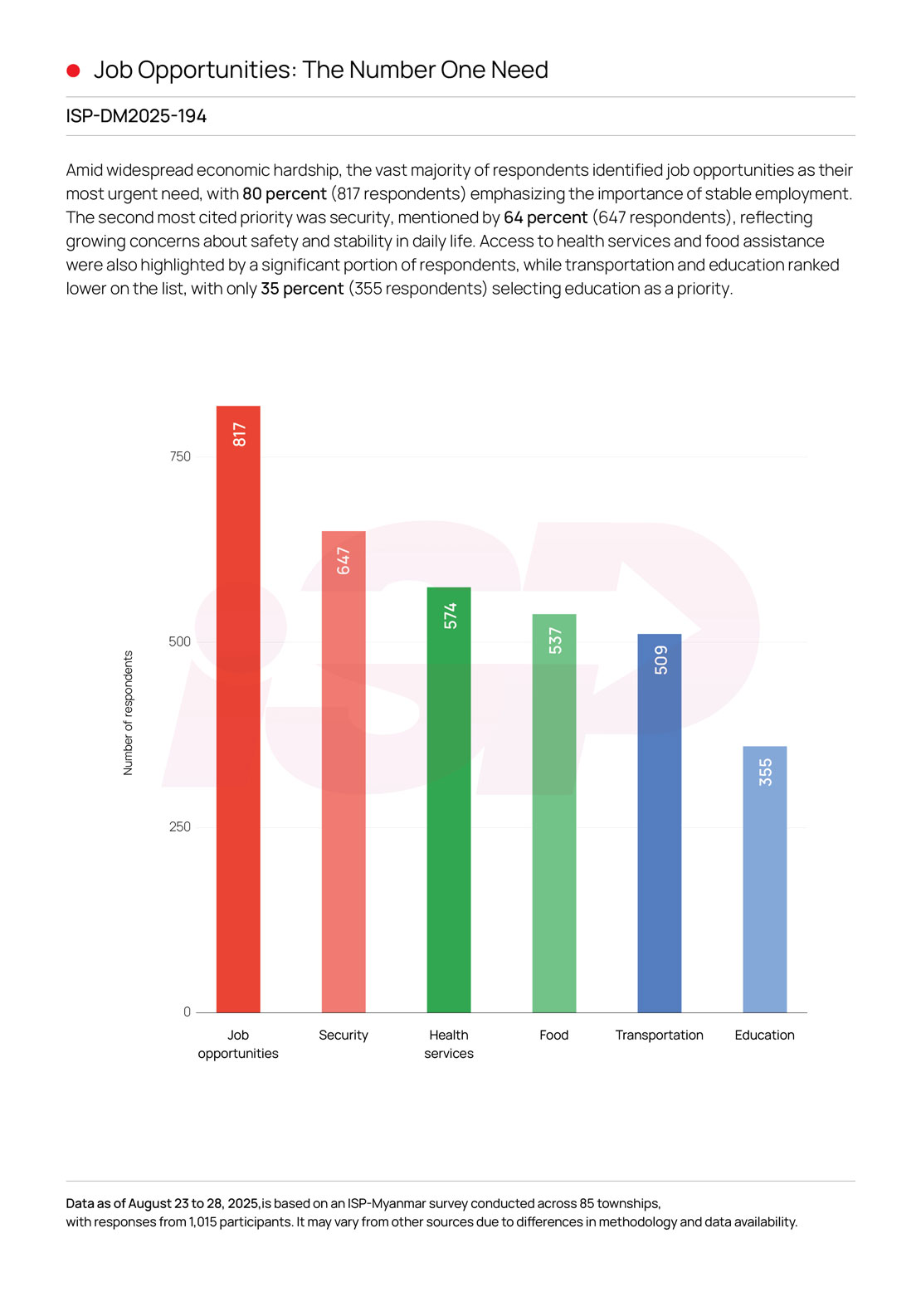
As you can see on the slide, finding employment has become the top priority — even more important than education. What does this tell us? It shows that even in a country torn apart by civil war, people still have a strong desire for self-reliance. Yes, international humanitarian aid and external support are urgently needed in many areas, but our people are not simply waiting for help to arrive. They are not hoping for survival through dependence on others. What they truly hope for is the ability to stand on their own and rebuild their lives by their own efforts.
So, to summarize, people are using every possible means to deal with the hardships they face, even taking on work in places like Kyar Phyant scam centers. Even when they’ve hit rock bottom, we can still see their capacity to endure and carry on. The challenges we’re living through today all stem from the coup and the collapse of institutions. At the same time, it’s clear that those very institutions are unable to provide any real help to the public. Yet, despite everything, our people have not lost their pride. They want jobs. They want income. They believe that if these needs are met, they can overcome the socioeconomic hardships they face. And what does this tell us? It shows the remarkable resilience and dignity of our people. With that, I’ll conclude my discussion here.
Thank you to all our panelists for sharing their insights. We’ll now move on to the Q&A session. I’d like to start by selecting two questions asked by the Gabyin members. Here’s the first question:
❓
It was mentioned that people still possess resilience. However, in our surroundings, it seems less like resilience and more like people are just going with the flow because there’s nothing else they can do. Can just going with the flow really be considered resilience?
Okay, I’ll take this question. When we talk about resilience, it’s really about finding a balance between physical strength (capacity and resources) and mental strength. The physical strength here doesn’t only mean personal capacity; it also includes the collective capacity of the community and the institutions that support it. Mental strength, on the other hand, means having the mental courage and determination to face challenges head-on and find ways to overcome them. If we look back at the survey results, more than half of the respondents said they could continue to struggle on. That shows that people are still holding on to their mental strength. But this mental strength is at its limits. Individually tackling head-on, but community support is weakened, and institutional support is not reliable. So, as we said earlier, resilience is not boundless. To recap, we view that people can still resolve the immediate problem, but they can become hopeless at any time.
Thank you very much for your answer. Let’s move on to question number two. The question asked:
❓
Right now, job opportunities are very limited. But when I read the concept note you shared, it says resilience still exists. So, I’d like to know—what kind of work are people doing for their livelihoods that allows them to remain resilient?
Thank you for the question. At the moment, people are using every possible means to cope with the hardships they face. As I mentioned earlier, some go to work in Kyar Phyant scam centers, while others take jobs like “date girl”. On the other hand, job opportunities are extremely limited, and gambling businesses are sprouting everywhere, almost like mushrooms. Let me share an example I heard from our discussions with local researchers. It’s about a manual laborer from a rural area. His wife was about to give birth, and he was jobless and in debt. Desperate to cover his wife’s delivery expenses and repay his debts, he came up with a risky plan — to serve in the military in someone else’s place. He went to the village elders and said, “If someone is conscripted and doesn’t want to serve, I’ll go in their place — just make sure they pay my family.” This shows how people are finding risky ways to cope as this kind of “conscription market” emerges. Similarly, we can see that when people face problems and hardships, they cope with resilience, often relying on short-term solutions. Still, more job opportunities are urgently needed, both for individuals and for the country’s future. With that, I’ll conclude my answer here.
Thank you for the answer. Now, we’d like to invite a comment from one of our Gabyin members attending today. You can use the Raise Hand button to share your thoughts. We’ll unmute you if you’ve pressed that button. Since I don’t see any hands raised yet, I’ll move to a question that came through the chat. The question is:
❓
Will these hardships be resolved after the election scheduled for December?
I’ll take that question. Since today’s discussion focuses on socioeconomic issues, it’s difficult to directly address them through a political lens. But I can say that the election planned for December will not solve these current problems. In fact, conflicts could intensify after the election. The international community will ask, instead of the democracy or legitimacy issues in the post-election, they will ask, “Will conflict crises be resolved, will they guarantee security and stability? And will it lead to economic development? We will have to see if these questions will be answered. Thank you.
Thank you for the insight. We’d like to take one more question and one comment from the Gabyin community. You can raise your hand now. While waiting, I’ll read another question from the chat,
❓
In the coping methods, it was mentioned that people are switching to domestic products. Does this mean local small and medium-sized enterprises (SMEs) will benefit and the economy might improve?
I will take this. Thank you for that question. We are indeed seeing this happen. For example, now that products like toothpaste and detergent from Thailand are no longer entering Myanmar, people have switched to domestic brands. However, it’s important to note that even local manufacturers depend on imported raw materials. Let me share an example from a discussion with local researchers. A cake shop owner in Yangon told us she can no longer buy the imported ingredients for her business. She worries that without those high-quality materials, she’ll lose customers, and if things continue this way, her shop may have to close within a few months. So, while the shift to domestic products may seem manageable for now, in reality, many small businesses are struggling to operate and will eventually face serious difficulties. With that, I’ll end my answer here.
Thank you to all the panelists for their thoughtful contributions. We’ll now move toward wrapping up today’s session. Before we close, I’d like to invite our panelists to share any final remarks.
Let me summarize our discussion in three key points. First, over the past four years, people have faced many immediate problems. These are not just short-term problems; they threaten both our society and country in the long run. Yet, the people have not given up and still believe in breaking through with self-reliance. Second, these hardships stem from the coup and the collapse of institutions. It’s clear that those institutions lack the capacity to help. Even so, the public continues to hold on to its mental strength. Third, we can see that people still possess both mental and physical strength to face hardship with resilience. Here, physical strength refers to the fundamental resources and capacities that support coping, while mental strength refers to mental toughness and perseverance. Individual capacity can keep people continuing, but the collective capacity of society is weakening, and the institutional capacity is nearly paralyzed. As we’ve said before, resilience has its limits. So, to keep resilience from fading and ensure it remains steady, it is essential that both mental strength and capacity are needed. With that understanding, we would like to conclude.
Thank you. Questions we couldn’t address in today’s episode due to time constraints will be answered via email later. The full survey report discussed in today’s program will also be released soon. You can read this and other research findings for free on ISP-Myanmar’s website, ispmyanmar.com, and on our social media channels. Thank you once again to all Gabyin members for joining us today. We’ll end our session here.
▪️Appendix Questions
The question listed below was submitted via chat during the 30 Minutes with the ISP event on October 18, 2025.
❓
The discussions organized by ISP-Myanmar are great because they’re short and to the point. Thank you for that. I have one question about the research—since you surveyed around 1,000 people, were the interviews conducted in person, or was the survey done online? Thank you.
As mentioned earlier, this survey was conducted in 85 townships across 14 states and regions, including the Naypyitaw Union Territory, with 12 respondents per township. It ensured a balanced representation of men and women and included participants from urban and rural areas, IDP camps, and border regions. The survey was carried out by ISP-Myanmar’s research network during the last week of September, through in-person and phone interviews. Respondents came from diverse backgrounds—ranging from low-income earners to business owners, employees, and housewives. While not fully comprehensive, the findings provide valuable insights, and more extensive studies will be needed.